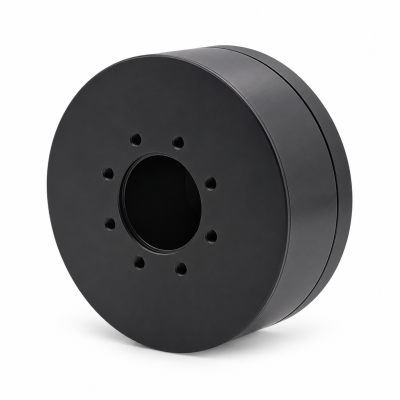
MG3505-8
 MG3505-9
 MG3505-36
 MG4315-8
 MG6010-6
 MG6010-8
 MG4305-10
 MG4310-10
 MG4310-36
 MG4310-40
 MG3510-8
 MG3510-64
 MG6010-36
 MG6010-48
 MG8108-6
 MG8108-8
 MG8108-36
 MG8108-48
 MG8115-6
 MG8115-9
 MG8115-36
 T-4024
 T-4929
 T-6034
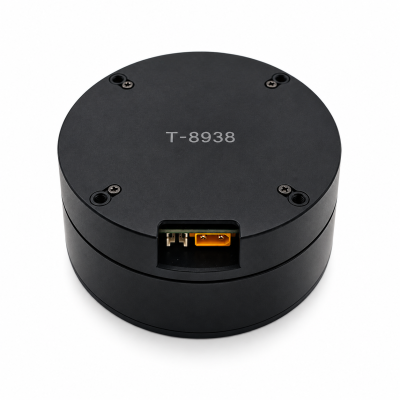
 T-8938
What Is Cogging Torque and Why Does It Matter?
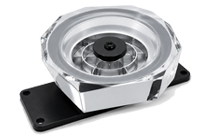
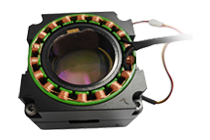
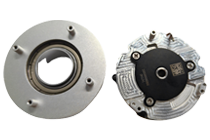
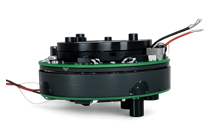
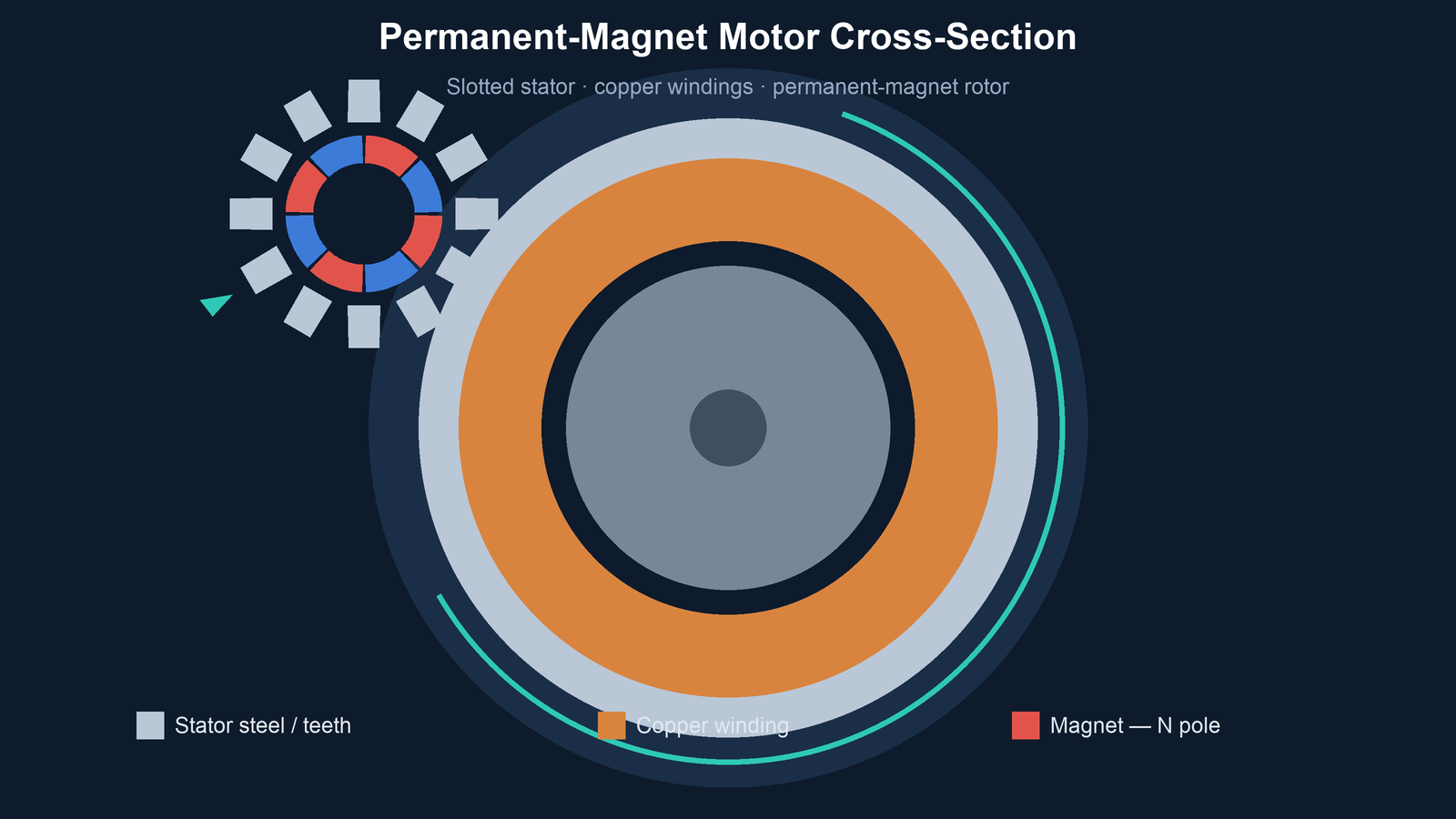
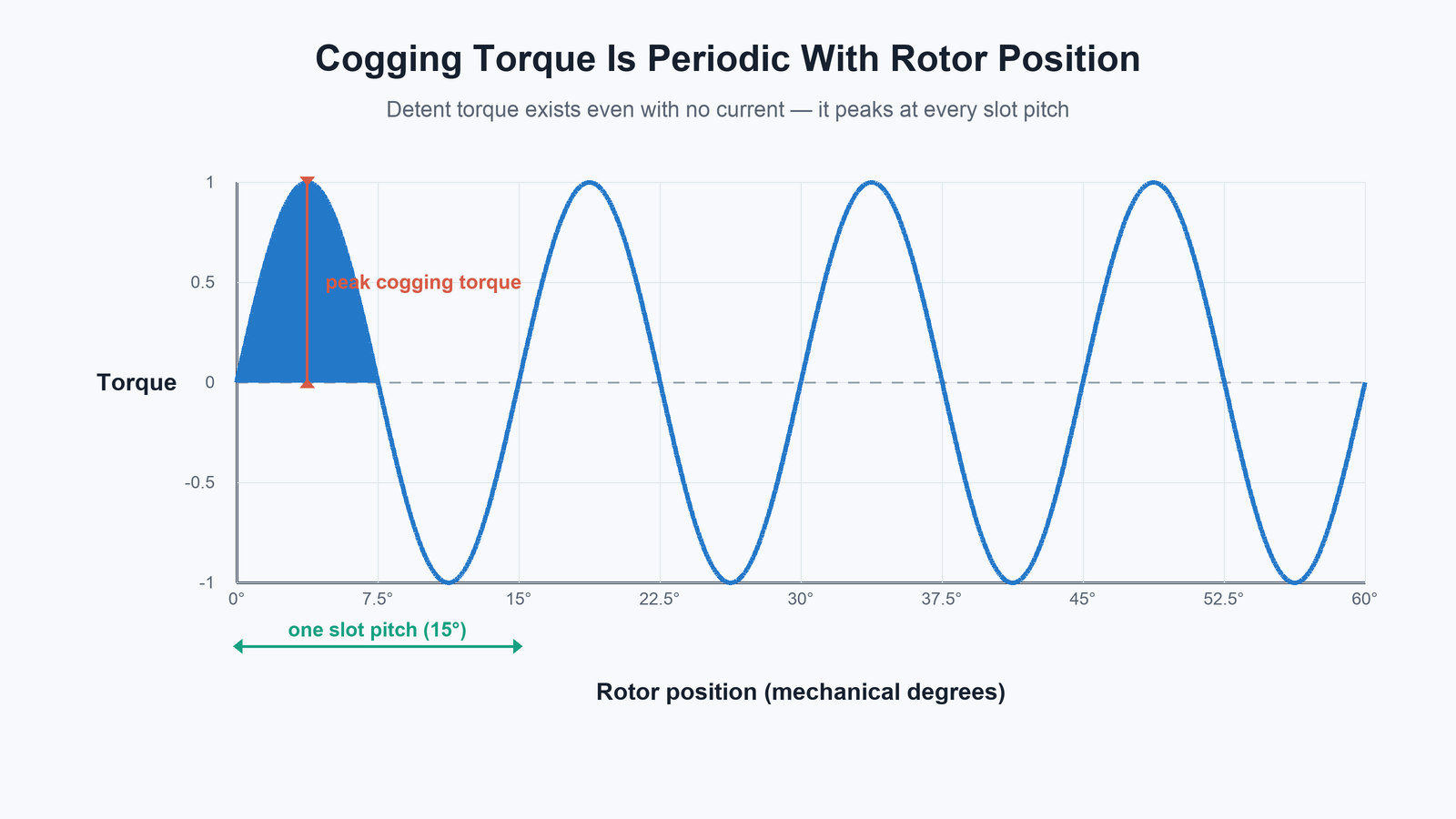
Turn the shaft of a permanent-magnet (PM) motor by hand and you will feel a jerky, stepped resistance even with the power switched off. That notchy click as the rotor snaps between positions is cogging torque, also called detent torque or no-current torque. It sits at the heart of torque ripple, motor vibration and noise, and low-speed positioning error — and it is one of the most important and most frequently misunderstood characteristics in electric motor design. Cogging torque is the torque produced in a permanent-magnet motor by the interaction between the rotor magnets and the slotted stator core when no current is flowing. The magnets naturally try to align with the positions where the magnetic flux path has the lowest reluctance, so the rotor clicks through a repeating pattern of stable and unstable positions, producing an oscillating, periodic torque. Three defining facts about cogging torque: Cogging cycles per revolution Cogging cycles = LCM(number of stator slots, number of rotor poles) For a 12-slot / 8-pole BLDC motor, LCM(12, 8) = 24, giving 24 cogging steps per turn (one every 15°). A 9-slot / 8-pole design gives LCM(9, 8) = 72 steps, each far smaller in amplitude — which is why the slot-pole combination is the first lever engineers pull to reduce cogging torque. Three ingredients combine to create cogging torque in any permanent-magnet motor: As each magnet edge passes a stator tooth, the magnetic circuit becomes easier or harder, and the rotor experiences a brief pull or push. The result is a periodic detent torque that shows up as a ripple in the motor output. On paper a torque that averages to zero sounds harmless. In practice it is the root cause of several field problems. Cogging torque adds a periodic disturbance on top of the useful electromagnetic torque, producing torque ripple that makes output uneven at low speeds, exactly where precision matters most. Because the rotor is repeatedly pulled toward and pushed away from alignment, the motor vibrates at the cogging frequency. That vibration becomes audible noise, a serious concern in EVs, appliances, medical devices, and camera gimbals. In servo motors, robotics, and direct-drive systems, cogging torque degrades positioning accuracy. The controller must fight the detent steps to hold or move the load smoothly, wasting energy and causing jerky motion. For power steering, e-bikes, drones, and handheld tools, cogging torque shows up as a rough, gritty feel that engineers work hard to minimise. Where it matters most EV traction motors, e-bike hub motors, robot joint motors and servo axes, gimbal and drone motors, medical pumps, and precision instrumentation. Cogging torque is measured by rotating the unpowered motor at very low speed with a high-resolution torque transducer and recording torque against rotor angle. The key metrics are: Engineers have several proven levers for lowering detent torque. The best choice depends on the motor type and manufacturing budget. Skewing angles the magnets or slots along the axial length so the torque peaks from different axial slices cancel each other out, dramatically smoothing the waveform. A slot/pole combination with a higher LCM produces more, smaller steps. Fractional-slot windings, such as 9 slots / 8 poles instead of 12 / 8, reduce both cogging torque and torque ripple in PMSM and BLDC designs. Optimising the magnet arc, rounding magnet corners, or adding small notches softens the sharp flux transitions that generate detent torque. Adding narrow dummy slots or teeth shifts the effective slot pitch and increases the cogging frequency, reducing amplitude without changing the winding. A slightly larger air gap, and tuning magnet width against slot pitch, reduce the reluctance variation that drives cogging torque, at the cost of a little torque density. No. Cogging torque is one source of torque ripple. Torque ripple is the broader term for any periodic variation in output torque, including current harmonics and winding effects. Cogging torque exists at zero current; other ripple sources require current. In a slotted permanent-magnet motor it is difficult to eliminate entirely, but it can be reduced to negligible levels using skewing, slot/pole selection, and magnet shaping. Slotless coreless designs avoid cogging torque altogether. Cogging torque itself does not consume energy because its average is zero, but the vibration and control effort it causes can reduce overall system efficiency and shorten bearing life. Any motor with permanent magnets facing a slotted iron stator, including BLDC motors, PMSMs, and stepper motors. Slotless or ironless core motors have essentially zero cogging torque. Cogging torque is the hidden stepped resistance in permanent-magnet motors, and it quietly shapes how smooth, quiet, and precise a motor feels. Understanding what it is, why it causes torque ripple and vibration, and how to reduce it through skewing, slot/pole optimisation, and magnet design is essential for anyone selecting or designing a BLDC motor or PMSM. If you are choosing a motor for a low-speed, low-noise, or high-precision robot joint motor application, ask your supplier for the cogging torque specification and how it was measured. For more selection guidance, see our Robot Joint Motor Technical Guides. Low-cogging motors for your build: explore our Robot Joint Motor range — including the Knee Joint Motor MGW 6010-8 and Shoulder Joint Motor SLJ20.What Is Cogging Torque?
What Causes Cogging Torque?
Why Does Cogging Torque Matter?
1. Torque Ripple
2. Vibration and Acoustic Noise
3. Poor Low-Speed Smoothness and Positioning
4. Degraded Feel and Control Quality
How Is Cogging Torque Measured?
How to Reduce Cogging Torque
1. Skew the Rotor or the Stator
2. Choose a Better Slot/Pole Combination
3. Shape or Notch the Magnets
4. Use Dummy Slots or Auxiliary Teeth
5. Optimise the Air Gap and Magnet Width
Frequently Asked Questions
Is cogging torque the same as torque ripple?
Can cogging torque be eliminated completely?
Does cogging torque affect motor efficiency?
Which motors have cogging torque?
Conclusion
Related Reading