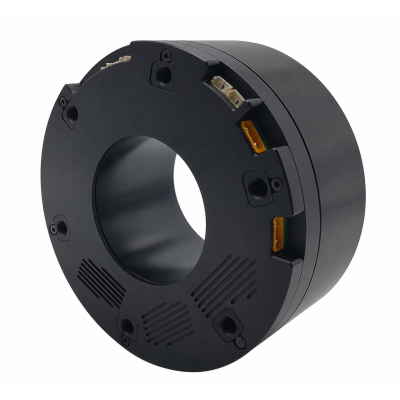
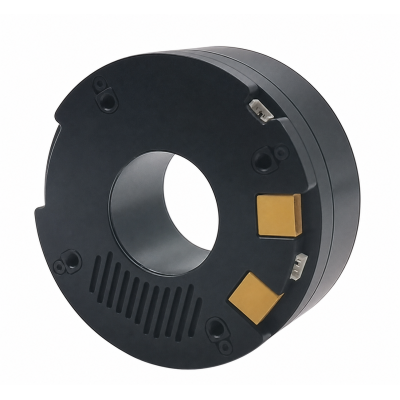
MG3505-8
 MG3505-9
 MG3505-36
 MG4315-8
 MG6010-6
 MG6010-8
 MG4305-10
 MG4310-10
 MG4310-36
 MG4310-40
 MG3510-8
 MG3510-64
 MG6010-36
 MG6010-48
 MG8108-6
 MG8108-8
 MG8108-36
 MG8108-48
 MG8115-6
 MG8115-9
 MG8115-36
 SRA705F
 SRA705FL
Direct Drive vs. Harmonic Drive: How to Choose the Right Actuator for Your Robot Joint
Direct Drive vs. Harmonic Drive: How to Choose the Right Actuator for Your Robot Joint
Every robot joint tells a story about torque, speed, and precision, but the ending depends on one decision: how you couple the motor to the joint.
Two architectures dominate modern robotics. In a direct drive joint, the motor rotor connects straight to the joint without gearing. In a harmonic drive joint, a strain-wave gearbox multiplies motor torque. Both are proven, both have strong defenders, and both fail when applied to the wrong task.
This guide explains how each architecture works, where each excels, and how to select the one that fits your robot, not the one that fits the trend.
What a robot joint actually needs
Before comparing drive types, define the job. Every joint needs three things:
- Torque density - enough torque to move the link and hold it under load without adding excessive weight.
- Backdrivability - how easily the joint can be moved by external force, which affects safety and force control.
- Precision and stiffness - how accurately the joint holds position and resists deflection under load.
Different applications weight these needs differently. A collaborative arm that prioritizes human safety values backdrivability. A high-speed pick-and-place cell values stiffness and repeatability. A humanoid leg values torque density and impact robustness. Decide which two matter most for your design first, because every architecture is a trade-off.
Harmonic drive joints: high torque in a compact package
A harmonic drive uses a flexible spline deformed by an elliptical wave generator to deliver reduction ratios from 50:1 to 160:1 in a single, lightweight stage. Because the gearbox multiplies torque, the motor can run small and fast, which keeps the whole actuator compact.
This explains the popularity of harmonic drives in industrial robot arms and, increasingly, in humanoid robots. They offer:
- High torque density and low weight per unit of output torque.
- Near-zero backlash for precise, repeatable positioning.
- A compact coaxial design that fits neatly inside a joint.
The trade-offs are real. Friction in the gearbox reduces backdrivability, so the joint feels stiff and needs more complex force sensing for compliant control. The flexspline is wear-prone and requires careful lubrication and maintenance. Because the motor spins fast to feed the reducer, efficiency drops at low output speeds. Harmonic drives are also premium components, which matters when you are building robots at scale.
Direct drive joints: simplicity and sensitivity
A direct drive joint connects the motor rotor directly to the joint axis. No gearbox, no backlash, no friction from reduction stages. The motor must produce the full output torque itself, which normally means a large-diameter, high-torque motor, often a frameless or hollow-shaft design.
Direct drive excels where compliance and control quality matter most:
- Excellent backdrivability for natural force control and safer human-robot interaction.
- Zero backlash and very high stiffness at the joint.
- No gear wear, lower maintenance, and a simpler, more reliable mechanical chain.
- Quiet operation and smooth low-speed motion without cogging artifacts.
The cost is size. A direct drive actuator is typically larger and heavier than a geared equivalent for the same peak torque, and it draws more current at low speed. Battery-powered mobile robots must budget carefully for mass and power. This is why frameless torque motors with large hollow shafts have become popular: they let designers integrate the motor around the joint structure itself, saving axial space and allowing cables and hoses to pass through the center of the joint.
Quick check before you choose
If the joint must deliver high torque from a small, light package and precision matters more than compliance, a geared architecture usually wins. If force control, backdrivability, and mechanical simplicity matter more than package size, direct drive is usually the better answer.
Head-to-head: which fits your application?
| Consideration | Harmonic drive joint | Direct drive joint |
|---|---|---|
| Torque density | Higher for a given package size | Requires a larger diameter motor |
| Backdrivability | Limited by gear friction | Excellent |
| Precision and backlash | Near-zero backlash | Zero backlash |
| Compliance and force control | Needs sensors and complex control | Natural and inherent |
| Maintenance | Flexspline wear, lubrication | Minimal |
| Efficiency at low speed | Drops | High |
| Cost at scale | Higher component cost | Higher motor cost |
Rules of thumb for choosing
- Choose harmonic drive when the joint must deliver high torque from a small, light package and precision matters more than compliance. This is typical for industrial arms, wrist axes, and shoulder joints.
- Choose direct drive when force control, backdrivability, and simplicity matter more than size. This is typical for collaborative robots, haptic devices, and research platforms.
- For humanoid robots, expect a hybrid strategy: direct drive for high-compliance joints such as ankles and wrists, geared drives for compact high-torque joints such as knees and elbows. Motor selection still decides the outcome: in a geared joint, the motor's torque-speed curve, cogging, and inertia determine feel and efficiency; in a direct drive joint, the motor is the whole system.
The motor inside matters more than the architecture
Whatever architecture you choose, the motor determines the robot's real-world performance. Hollow-shaft frameless motors shrink direct drive joints and simplify cable routing. Low-cogging servo motors make geared joints quieter and smoother. High-torque-density windings reduce weight where it hurts most, at the end of the arm.
Solis Motor designs and manufactures joint motors, hollow-shaft motors, and servo motors for robotics applications, supporting custom voltage, speed, torque, and mechanical integration to match your actuator architecture. If you are evaluating drive topologies for a new robot project, contact our engineering team to discuss the right motor for your joint.
Your robot deserves an honest torque conversation. Start with the motor.