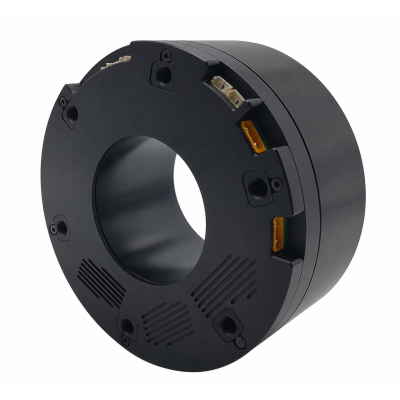
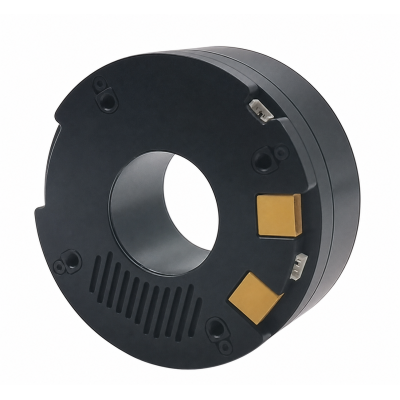
MG3505-8
 MG3505-9
 MG3505-36
 MG4315-8
 MG6010-6
 MG6010-8
 MG4305-10
 MG4310-10
 MG4310-36
 MG4310-40
 MG3510-8
 MG3510-64
 MG6010-36
 MG6010-48
 MG8108-6
 MG8108-8
 MG8108-36
 MG8108-48
 MG8115-6
 MG8115-9
 MG8115-36
 SRA705F
 SRA705FL
Robot Joint Motors: A Practical Guide to Torque, Heat, and Integration
A robot joint motor must deliver the required torque and speed within the available space and thermal limits. Begin with the joint's motion cycle, then evaluate the motor together with its drive, transmission, feedback, and housing. A peak torque figure alone cannot describe how the assembled joint will perform.
Start with the load and motion cycle
Define the payload, joint positions, acceleration, operating speed, and time spent holding a load. The same payload can impose different torque requirements as the robot changes posture. Include repeated starts, stops, and dwell periods in the specification.
Separate short-duration peak demands from sustained operation. Check the torque-speed curve at the intended supply voltage and current limits. Ask which mounting and cooling conditions apply to the published continuous rating.
Choose the motor architecture around the joint
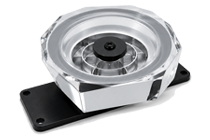
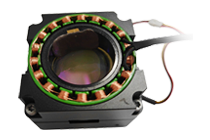
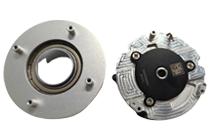
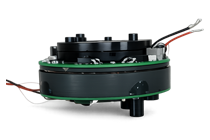
A frameless motor supplies the rotor and stator for integration into the machine. The joint designer must provide the supporting mechanical arrangement, including bearings and a housing. This approach offers packaging flexibility, but it also makes assembly accuracy and heat transfer part of the integration work.
Frameless does not automatically mean direct drive. A frameless motor may drive the joint directly or work with a gearbox. Compare the complete assemblies, including transmission efficiency, backlash, stiffness, and installation space.

Treat heat as a joint-level constraint
The motor winding is only one temperature limit. Nearby encoders, bearings, and gearbox components may have different allowable temperatures. A motor that tolerates a high winding temperature can still create thermal problems for the surrounding assembly.
Evaluate heat flow through the stator mounting and housing under the intended duty cycle. During prototype testing, measure relevant component temperatures and check them against their specified limits. Do not assume a catalog rating will remain unchanged inside a compact enclosure.
Include feedback and controls in the evaluation
Define the required joint positioning performance and how it will be measured. Review feedback compatibility with the drive and controller, then test the assembled joint through reversals and low-speed motion. Record the payload, trajectory, and temperature so that results can be compared consistently.
Keep motor specifications and joint specifications separate. A motor data sheet cannot, by itself, establish the positioning performance of an assembly that also includes a transmission, bearings, and structural parts.

Prepare a useful motor selection brief
Before requesting a motor recommendation, prepare the following information:
- Required joint torque and speed throughout the motion cycle.
- Available supply voltage and drive current limits.
- Installation dimensions, mass target, and cable routing space.
- Cooling arrangement and component temperature limits.
- Transmission choice, feedback interface, and acceptance tests.
Use this brief to compare candidate motors, then validate the selected option in a representative joint prototype. The most useful selection is one supported by measured performance under the conditions your robot will actually encounter.