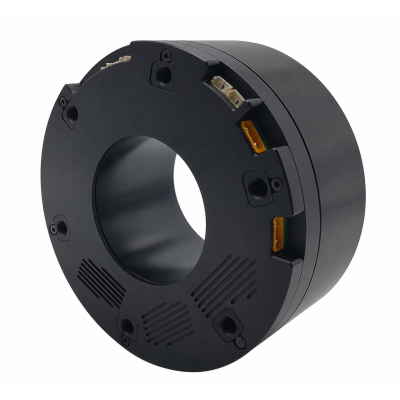
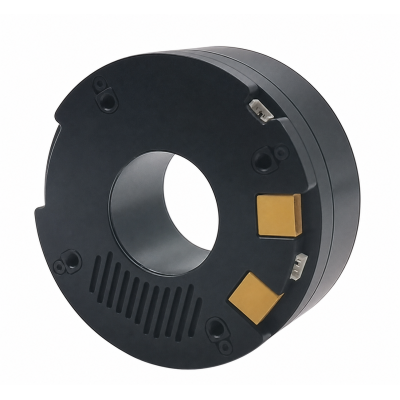
MG3505-8
 MG3505-9
 MG3505-36
 MG4315-8
 MG6010-6
 MG6010-8
 MG4305-10
 MG4310-10
 MG4310-36
 MG4310-40
 MG3510-8
 MG3510-64
 MG6010-36
 MG6010-48
 MG8108-6
 MG8108-8
 MG8108-36
 MG8108-48
 MG8115-6
 MG8115-9
 MG8115-36
 SRA705F
 SRA705FL
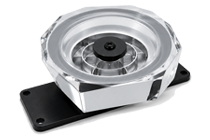
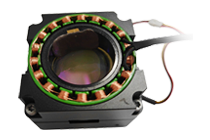
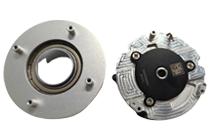
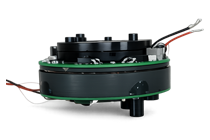
Why High-Torque Hollow-Shaft Motors Are Powering the Next Generation of Humanoid Robots
Why High-Torque Hollow-Shaft Motors Are Powering the Next Generation of Humanoid Robots
Humanoid robots have moved from research laboratories into real product roadmaps. Global manufacturers are investing heavily in bipedal platforms designed for warehouses, factories, healthcare, and household assistance. At the center of every one of these robots is the same engineering challenge: how to pack high torque, precise control, and reliable feedback into a joint that is small, light, and strong enough to move a human-scale body all day.
Joint actuators are the most critical components in a humanoid robot. They determine how smoothly the robot walks, how precisely it grasps, and how long it can operate before overheating or wearing out. In this article, we explain why high-torque hollow-shaft motors are becoming the preferred joint actuation solution for next-generation humanoid platforms, and what that means for robot developers.
The key takeaway
Humanoid robots need joint motors that combine high torque density, integrated drivers, absolute encoders, and hollow-shaft cable routing in one compact package. This integration reduces weight, simplifies assembly, improves reliability, and shortens development cycles.
The Rise of Humanoid Robots Creates New Motor Demands
Unlike traditional industrial robot arms bolted to a fixed base, humanoid robots carry their own weight through every joint. Each motor must lift not only the payload but also the weight of the limbs and actuators above it. This creates a unique requirement: high torque density, meaning maximum torque per kilogram and per cubic centimeter.
Humanoid joints also operate in a wide dynamic range. Walking requires smooth low-speed control and precise torque modulation; standing up and balancing demand high peak torque; grasping objects requires fine position and force control. A joint motor must handle all of these within tight thermal and packaging limits, which is why off-the-shelf industrial motors rarely fit humanoid requirements without heavy customization.
Why Hollow-Shaft Design Matters for Humanoids
A hollow-shaft (through-bore) motor allows power cables, communication wires, optical fibers, and pneumatic lines to pass through the rotation axis. In a humanoid robot with dozens of joints, wiring is one of the biggest mechanical headaches. Cables routed externally get pinched, twisted, and fatigued as joints rotate, especially during continuous rotation of waist or wrist joints.
The hollow bore solves this cleanly: cables stay protected inside the joint axis, routing is simpler, and the risk of cable failure drops significantly. Larger bores, such as the 50 mm bore found on bigger joint motors, can even accommodate multiple power cables and structural components, making them ideal for waist and shoulder joints where cable volume is highest.
Integration Is the Real Enabler
The most important trend in joint actuation is integration. Next-generation joint motors combine the brushless motor, servo driver, absolute encoder, and communication interface in a single housing. This eliminates external driver boxes, separate encoder boards, and large bundles of connectors, which reduces assembly time, lowers system cost, and improves electromagnetic compatibility.
Integrated designs also shorten the development cycle for robot builders. Instead of selecting, mounting, and tuning a motor, driver, and encoder separately, developers receive a tested, closed-loop actuator that supports position, speed, and torque control out of the box. For a humanoid project with 20 to 40 joints, this simplification is enormous.
Precision feedback for natural motion
High-resolution absolute encoders, such as 20-bit versions, give the controller accurate joint position at startup without homing routines. Combined with repeatability around ±0.004°, this enables the smooth, natural motion that humanoid applications demand — from stable walking to precise manipulation.
Torque Density and the Weight Chain Effect
In a humanoid robot, weight compounds. A heavier actuator in the forearm increases the torque required at the elbow, shoulder, and waist. This is known as the weight chain effect, and it is why motor weight is as important as motor torque in humanoid design.
Manufacturers therefore evaluate joint motors by torque-to-weight ratio rather than absolute torque alone. A motor delivering 4 N·m rated torque at around 1.1 kg, for example, offers a strong balance for shoulder-class joints, while a 1 N·m motor at roughly 420 g suits elbow and wrist joints. Choosing the right ratio at every joint keeps the whole robot lighter, faster, and more energy-efficient.
Direct-Drive Advantages for Humanoid Motion
Many humanoid designs now favor direct-drive or quasi-direct-drive joints over traditional gearbox solutions. Direct-drive motors eliminate gear backlash, transmission friction, and gear noise, giving developers better force control and smoother motion. This matters for walking balance and safe physical interaction with humans.
While geared solutions can offer higher torque at low speed, they add complexity, weight, and compliance that complicate control. For modern humanoids that prioritize natural motion, precision, and quiet operation, direct-drive hollow-shaft motors are increasingly the engineering choice.
How Motor Selection Translates into Market Advantage
For robot developers, the right joint motor shortens time to market and reduces field failures. For robot buyers, it means better performance, lower maintenance, and longer service life. This is why joint motor selection has become a strategic decision rather than a component-level detail.
As humanoid robots scale toward mass production, demand is shifting toward suppliers who can provide complete joint actuation solutions with consistent quality, documented performance, and customization support. Suppliers with integrated hollow-shaft motor platforms are well positioned to serve this growing market.
Key Selection Checklist for Humanoid Joints
Frequently Asked Questions
Why do humanoid robots need hollow-shaft motors?
Because dozens of joints must route power, signal, and pneumatic lines through moving axes. Hollow-shaft motors keep wiring protected inside the axis, preventing pinch, twist, and fatigue failures while simplifying assembly.
What is the advantage of integrated joint motors?
Integrated motors combine the motor, driver, and encoder in one unit, eliminating external components, reducing wiring, simplifying tuning, and shortening development time for multi-joint robots.
Are direct-drive motors suitable for humanoid joints?
Yes. Direct-drive eliminates backlash and gear noise, enabling precise force control and natural motion, which are essential for walking balance and safe human interaction.
How should I size a joint motor for a humanoid robot?
Start with the torque profile of each joint under real duty cycles, then optimize torque-to-weight ratio, encoder resolution, bore size, and communication interface to meet the full-system requirement.
Looking Ahead
The humanoid robotics industry is at an inflection point, and joint motor technology is advancing with it. High-torque hollow-shaft motors with integrated drivers and high-resolution encoders are emerging as the standard architecture for next-generation platforms. Developers who lock in the right actuation partner early will gain a real competitive edge in performance, cost, and speed to market.
If you are developing a humanoid or collaborative robot and evaluating joint actuation options, we invite you to explore our robot joint motor range or talk to our engineering team about your load profile and performance targets.