MG3505-8
 MG3505-9
 MG3505-36
 MG4315-8
 MG6010-6
 MG6010-8
 MG4305-10
 MG4310-10
 MG4310-36
 MG4310-40
 MG3510-8
 MG3510-64
 MG6010-36
 MG6010-48
 MG8108-6
 MG8108-8
 MG8108-36
 MG8108-48
 MG8115-6
 MG8115-9
 MG8115-36
 SRA705F
 SRA705FL
What Is a Hollow-Shaft Motor? A Beginner's Guide
What Is a Hollow-Shaft Motor? A Beginner's Guide
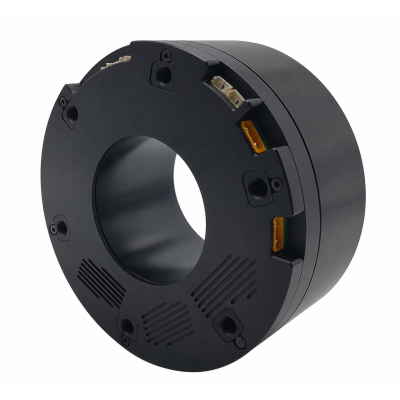
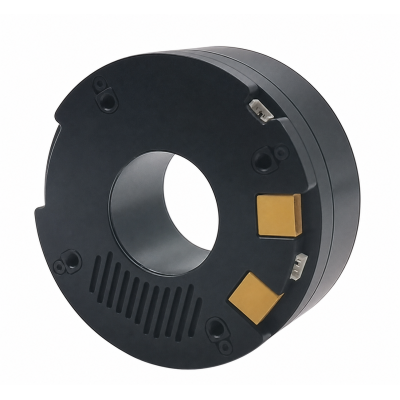
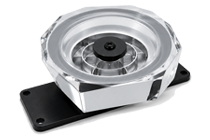
If you are new to motion control, you may have come across terms like hollow-shaft motor, through-bore motor, or hollow-bore actuator and wondered what makes them different from a regular motor. The idea is simple: instead of a solid output shaft, a hollow-shaft motor has a hole running through the center of its rotor. That opening can carry cables, wires, optical fibers, air lines, or even mechanical components through the rotation axis.
This small structural difference has a surprisingly large impact on how machines are designed. In this beginner's guide, we explain what a hollow-shaft motor is, how it works, where it is used, and how to decide whether it is the right choice for your project.
The short answer
A hollow-shaft motor is a motor with a central bore through the rotor, allowing wires and components to pass through the axis of rotation. It keeps wiring organized, prevents cable twisting, and simplifies the design of rotary systems such as robot joints, gimbals, and rotary stages.
How a Hollow-Shaft Motor Is Built
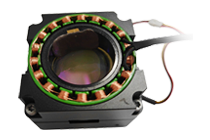
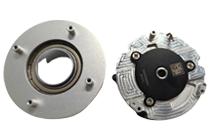
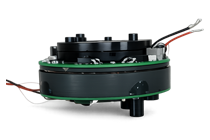
Like any brushless motor, a hollow-shaft motor has two main parts: a stationary stator with coils and a rotating rotor with permanent magnets. The difference is in the rotor geometry. In a conventional motor, the rotor is mounted on a solid steel shaft. In a hollow-shaft motor, the rotor is built around an open bore, and the shaft itself is hollow, forming a continuous passage through the motor.
The bore is measured by its diameter, for example Ø16 mm, Ø31 mm, or Ø50 mm. The larger the bore, the more cables or components can pass through. The motor is driven the same way as a standard brushless motor: the driver energizes the coils in sequence, creating a rotating magnetic field that pulls the rotor magnets around. Position feedback from an encoder keeps the rotation accurate.
Hollow Shaft vs. Solid Shaft: What Changes
The most practical difference is wiring. In machines with rotating parts, cables attached externally can get caught, pinched, or twisted as the joint rotates. A hollow-shaft motor routes cables through the axis, keeping them stationary relative to the rotating frame and dramatically reducing wear. This is why hollow-shaft motors are common in applications where cleanliness and reliability of wiring matter.
Where Hollow-Shaft Motors Are Used
Hollow-shaft motors appear in many precision motion systems. In robot joints, they let power and signal cables pass through each joint, which is essential for multi-axis arms with many rotating joints. In gimbals and camera platforms, they keep cables out of the way while the platform pans and tilts. In rotary stages and turntables, they allow wiring or optical paths to run through the center of rotation. They are also used in radar platforms, laser scanners, medical devices, and exoskeletons.
In all of these applications, the hollow bore solves the same fundamental problem: how to deliver power, signals, or fluids to a rotating mechanism without messy or failure-prone external wiring.
Integrated hollow-shaft motors
Many modern hollow-shaft motors are also integrated units: the motor, servo driver, and absolute encoder are combined in one housing. This reduces external components, simplifies assembly, and provides position, speed, and torque control out of the box.
How to Choose a Hollow-Shaft Motor
When comparing hollow-shaft motors, start with the bore size your wiring needs, then check the torque and speed requirements of your application. Verify the encoder resolution against your positioning accuracy target, and confirm the communication interface matches your controller, for example CAN FD, RS485, or PWM. Also consider the operating voltage, protection rating, weight, and whether an integrated driver would simplify your design.
If your mechanism has continuous rotation or a complex cable bundle, a hollow-shaft motor is usually worth the investment. If your application is a simple fixed-axis load with no wiring through the axis, a conventional motor may be enough.
Frequently Asked Questions
Can I run cables through a hollow-shaft motor while it rotates?
Yes. The bore is designed for this purpose. For continuous rotation, cables should be routed with appropriate strain relief and bend radius so they do not wear at the entry points.
Does a hollow bore weaken the motor?
Motor performance depends on the electromagnetic design, not simply on the presence of a bore. Hollow-shaft motors are engineered for their intended torque and speed, and modern designs deliver strong torque density in compact packages.
Are hollow-shaft motors more expensive than solid-shaft motors?
They can be, because of the more complex mechanical construction. However, they often reduce overall system cost by simplifying wiring, assembly, and maintenance, especially in multi-axis machines.
What is the difference between a hollow-shaft motor and a hollow-bore actuator?
The terms are often used interchangeably. A hollow-bore actuator usually refers to an integrated unit that includes the motor, driver, and feedback system around a central bore, which is common in robot joint applications.
Summary
A hollow-shaft motor is a simple idea with big design benefits: a central bore that lets cables and components pass through the axis of rotation. It simplifies wiring, improves reliability, and enables compact layouts in robots, gimbals, optical systems, and automation equipment. If you are designing a rotary system with wiring challenges, it may be exactly what you need.
Interested in learning more? Browse our hollow-shaft motor range or contact our team to discuss your application.