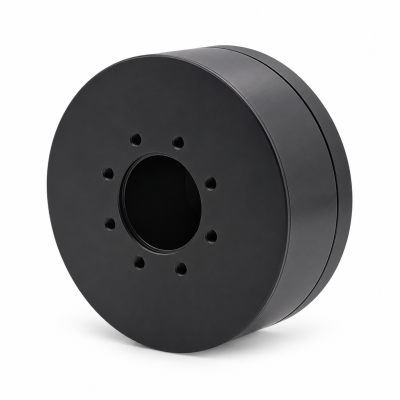
MG3505-8
 MG3505-9
 MG3505-36
 MG4315-8
 MG6010-6
 MG6010-8
 MG4305-10
 MG4310-10
 MG4310-36
 MG4310-40
 MG3510-8
 MG3510-64
 MG6010-36
 MG6010-48
 MG8108-6
 MG8108-8
 MG8108-36
 MG8108-48
 MG8115-6
 MG8115-9
 MG8115-36
 T-4024
 T-4929
 T-6034
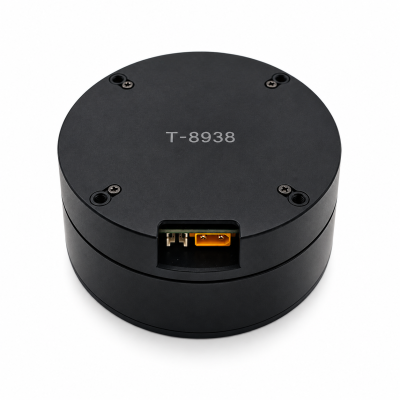
 T-8938
What Is Motor KV Rating and How Is It Calculated?
BLDC Motor Selection Guide
What Is Motor KV Rating?
KV rating, properly written as Kv, is the velocity constant of a brushless DC (BLDC) motor. It states how many revolutions per minute (RPM) the motor turns for every volt applied, measured with no load on the shaft. It is a speed constant, not a power or quality rating.
The same constant appears across every brushless motor family, from small drone motors to robot joint motors and galvo scanner motors. In robotics data sheets it is often listed in its inverse form, the torque constant Kt or the back-EMF constant Ke, but the physics is identical.
For example, a 1000KV brushless motor spins at approximately 1,000 RPM for each volt. Run that motor on an 11.1 V (3S) lithium battery and its theoretical no-load speed is about 11,100 RPM (1,000 × 11.1).
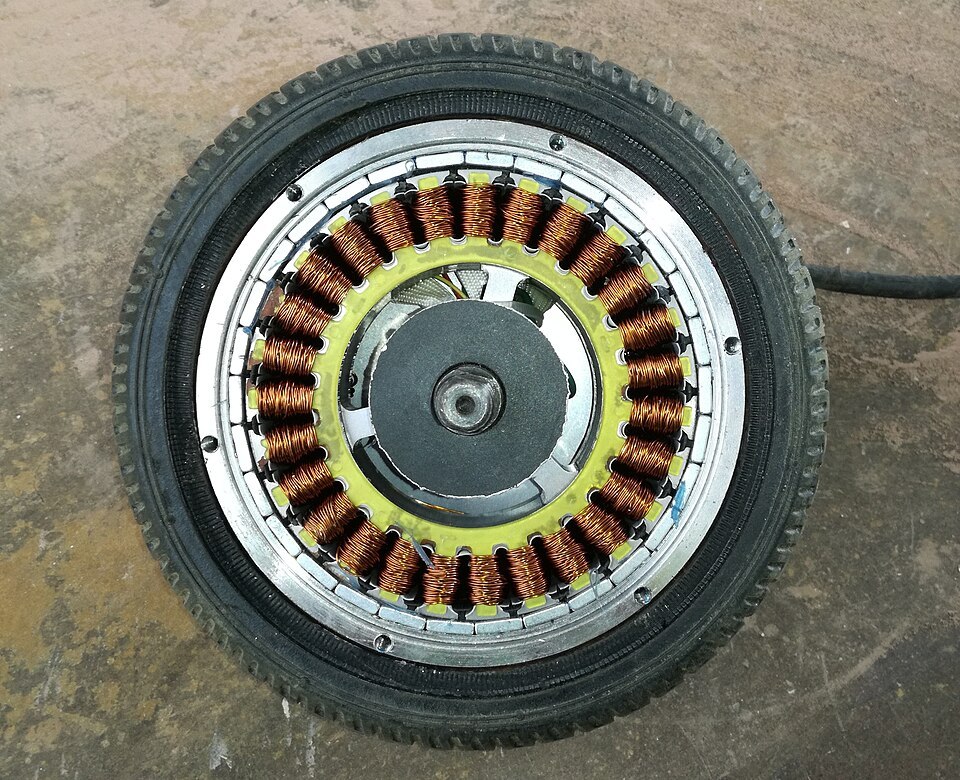
Direct answer: KV = no-load RPM ÷ voltage. Higher KV means more speed per volt but less torque per amp; lower KV means less speed per volt but more torque per amp.
How Is Motor KV Rating Calculated?
The calculation needs only two values taken with the motor running unloaded:
KV = no-load RPM ÷ applied voltage
In practice, run the BLDC motor without a load, record its RPM with a tachometer or ESC telemetry, and record the supply voltage at the same moment, then divide the two numbers. KV is rooted in back-EMF: as a motor spins, it generates a voltage that opposes the supply. At no load, the back-EMF is very close to the applied voltage, so the no-load RPM per volt is a reliable measure of KV.
KV and the torque constant
KV is inversely related to the motor’s torque constant, Kt. Knowing one lets you calculate the other, and it explains why a higher KV motor always trades away torque per amp:
Kt (N·m/A) = 60 ÷ (2π × KV)
Worked example: a 1000KV motor has a torque constant of about 9.55 ÷ 1000 = 0.00955 N·m per amp. A 200KV motor produces roughly 0.048 N·m per amp, about five times more torque per amp, because its KV is five times lower. This inverse relationship is why low-KV windings are chosen for high-torque robot joint motors.
What Determines a Motor’s KV?
A BLDC motor’s KV is fixed by its construction, not by the battery or controller. The main factors are:
Winding turns
More turns of wire per stator tooth lower the KV and raise torque per amp. Fewer turns raise the KV.
Wire gauge
Thicker wire allows fewer turns and higher current, which typically pushes KV up while improving current handling.
Magnet strength
Stronger magnets lower the KV and increase torque, because each rotation generates more back-EMF.
Winding termination
For the same coils, a Delta connection gives about 1.73× the KV of a Wye connection.
High KV vs Low KV Motors
The right KV depends on the load. High KV motors favor speed with light loads; low KV motors favor torque with heavier or larger loads.
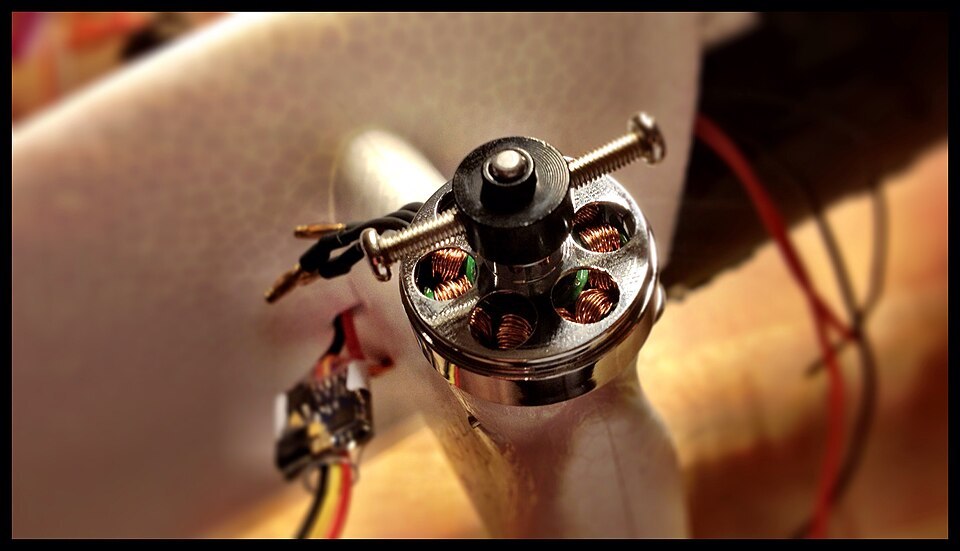
High KV
More RPM per volt, lower torque per amp. Best for small propellers, cooling fans, galvo scanner motors, and lightweight FPV or RC drones.

Low KV
Fewer RPM per volt, higher torque per amp. Best for robot joint motors, frameless torque motors, hollow-shaft and harmonic-drive actuators, and heavy lift.
Choosing KV for Robot Joint Motors and Precision Drives
For a robot joint motor, you almost always want a low-KV winding, because a low KV means high torque per amp to hold and move the joint. This is why joint actuators, frameless torque motors, and hollow-shaft or planetary robot joint motors are wound for low speed and high torque, serving humanoid robots, exoskeletons, quadrupeds, AGVs, and robotic arms.
At the other end, high-KV windings favor speed over torque. Galvo scanner motors and mirror galvanometers, which slew a mirror to precise positions at high speed, and cooling fans or lightweight drone motors all use higher-KV, low-torque windings.
Practical rule: choose a KV whose no-load RPM sits comfortably above your required loaded speed, then confirm the torque constant meets your continuous torque. In robotics, select the winding by Kt and Ke first, then verify the no-load speed.
Frequently Asked Questions
Is KV the same as kilovolts?
No. The symbol kV means kilovolts. The motor constant is written Kv, with a subscript v for velocity, and it means RPM per volt.
Does a higher KV mean a more powerful motor?
No. Higher KV only means more speed per volt. A higher KV motor actually produces less torque per amp, so power depends on how much current and voltage the motor can handle.
Can I change a motor’s KV?
Only by rewinding the stator or changing the termination between Delta and Wye. KV is fixed by construction and cannot be changed in software.
Why is KV measured with no load?
Under load, current flows and the I×R voltage drop reduces the effective voltage, which would distort the measurement. No-load measurement keeps the back-EMF close to the applied voltage, giving a clean RPM-per-volt value.
Summary
Motor KV rating is the motor’s RPM per volt at no load. It is calculated by dividing no-load RPM by applied voltage, and it is the inverse of the torque constant. The value is set by winding turns, wire gauge, magnet strength, and termination. Match it to the application: high KV for speed, low KV for the high-torque demands of robot joint motors and precision drives.
Explore Solismotor robot joint motors