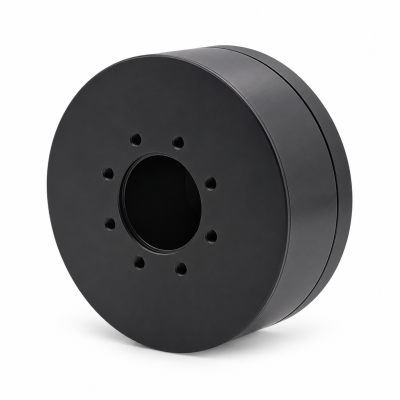
MG3505-8
 MG3505-9
 MG3505-36
 MG4315-8
 MG6010-6
 MG6010-8
 MG4305-10
 MG4310-10
 MG4310-36
 MG4310-40
 MG3510-8
 MG3510-64
 MG6010-36
 MG6010-48
 MG8108-6
 MG8108-8
 MG8108-36
 MG8108-48
 MG8115-6
 MG8115-9
 MG8115-36
 T-4024
 T-4929
 T-6034
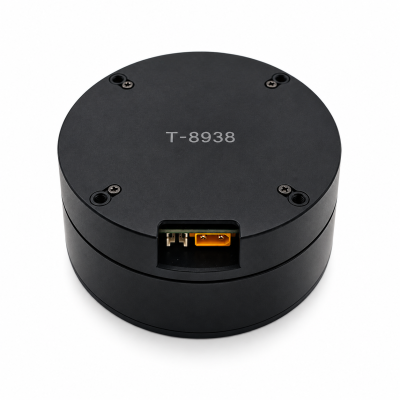
 T-8938
How to Select the Perfect BLDC Motor: Considering Load, Torque, and Voltage Requirements
In today's rapidly evolving technological landscape, the selection of the correct motor is paramount for achieving optimal system performance and efficiency. Among the myriad options, the Brushless DC (BLDC) motor has emerged as a cornerstone for numerous high-demand applications. These motors are the quiet workhorses behind everything from industrial robotics and electric vehicles to precision medical devices.
However, pinpointing the perfect BLDC motor often presents a significant challenge, requiring a sophisticated understanding of load characteristics, torque requirements, and voltage specifications. We aim to demystify this selection process, providing a comprehensive guide to navigate these critical factors.
This article will explore the inherent advantages of BLDC motor technology and provide a structured approach to making informed decisions. By following this guide, you can ensure your projects benefit from the unparalleled precision, longevity, and efficiency that BLDC motors offer.
Key Takeaways
- Brushless Design: BLDC motors use electronic commutation and eliminate brush wear. Efficiency, service life, noise and maintenance needs depend on the motor, drive, operating conditions and application.
- Commutation is Key: The core difference lies in commutation. Brushed motors use a physical, wearing commutator, while BLDC motors use sophisticated electronic controllers for precise, frictionless current switching.
- The Holy Trinity of Selection: The ideal BLDC motor choice always comes down to a careful analysis of three interdependent factors:
- Load: The nature of the work the motor must do (continuous, intermittent, dynamic).
- Torque: The rotational force required, including starting, running, and peak torque.
- Voltage: The power supply characteristics, which directly influence speed and efficiency.
- Application-Specific Optimization: There is no one-size-fits-all solution. The demands of a medical device are vastly different from those of an industrial robot, and your motor selection must reflect this.
- Long-Term Value Over Upfront Cost: While BLDC systems may have a higher initial cost due to the need for controllers, their long-term value in efficiency, reliability, and reduced maintenance often provides a superior return on investment.
Understanding the Foundational Advantages of BLDC Motors Over Traditional Designs
To appreciate why BLDC motors are often the superior choice, it's essential to understand their fundamental design differences compared to their brushed counterparts. The key distinction lies in the mechanism used to switch the direction of current in the motor windings—a process known as commutation.
The Core Distinction: Commutation Mechanisms
The method of commutation not only defines the motor type but also dictates its primary performance characteristics, including efficiency, lifespan, and control complexity.
Traditional Brushed DC Motors vs. BLDC Motor Innovation
Traditional brushed DC motors rely on a mechanical system for commutation. This system consists of carbon brushes that physically contact a segmented ring, called a commutator, on the motor's rotor. As the rotor spins, the brushes slide over the commutator segments, mechanically switching the current's direction in the windings.
While simple and effective for basic applications, this mechanical contact is the primary source of a brushed motor's limitations:
- Friction and Wear: The constant rubbing of brushes against the commutator causes them to wear down, requiring periodic replacement and generating carbon dust.
- Energy Loss: Friction generates heat and results in wasted energy, lowering the motor's overall efficiency. Brushed motors typically have an efficiency of around 75-80%.
- Electrical Noise: The sparking (arcing) that occurs as brushes make and break contact creates significant electromagnetic interference (EMI), which can disrupt sensitive nearby electronics.
- Limited Speed: The physical limitations of the brush-commutator interface restrict the maximum achievable speed of the motor.
Electronic Commutation: The BLDC Motor Difference
BLDC motors revolutionize this process by eliminating the brushes and mechanical commutator entirely. Instead, they utilize a sophisticated electronic controller (often called an Electronic Speed Controller or ESC) to perform commutation. The motor's design is inverted: the permanent magnets are on the rotor, and the windings are on the stationary stator.
The controller uses feedback to determine the exact position of the rotor. This is typically achieved in one of two ways:
- Sensor-Based Commutation: Hall-effect sensors are embedded in the motor to detect the position of the rotor's magnets. The controller uses these precise signals to energize the correct stator windings in sequence, creating a rotating magnetic field that pulls the rotor along.
- Sensorless Commutation: More advanced controllers can infer the rotor's position by measuring the back electromotive force (back-EMF)—a voltage generated in the un-energized windings as the motor spins. This method reduces component count and cost, though it can be less reliable at very low speeds.
This electronic approach to commutation is the source of the BLDC motor's significant advantages.
A table comparing the key characteristics of brushed and brushless DC motors.
| Feature | Brushed DC Motor | Brushless DC (BLDC) Motor |
|---|---|---|
| Commutation | Mechanical (Brushes and Commutator) | Electronic (Controller and Sensors/Back-EMF) |
| Typical Efficiency | 75-80% | 85-93% |
| Lifespan | Limited by brush wear (~3,000 hours) | Limited by bearing wear (>10,000 hours) |
| Maintenance | Regular brush inspection and replacement | Virtually maintenance-free |
| Speed (RPM) | Lower, limited by mechanical friction | Higher, no mechanical limitation on commutation |
| Noise (Audible & EMI) | Moderate to high due to brush arcing | Very low, minimal EMI |
| Control Complexity | Simple (runs with direct DC supply) | Complex (requires a dedicated controller) |
| Cost | Lower initial motor cost | Higher system cost (motor + controller) |
Key Performance Attributes of BLDC Motors
The shift from mechanical to electronic commutation unlocks a suite of performance benefits that make BLDC motors the preferred choice for demanding and high-precision applications.
Exceptional Efficiency and Energy Conservation in BLDC Motors
BLDC motors are significantly more efficient than their brushed counterparts, with typical efficiencies ranging from 85% to 90%, and some advanced designs exceeding 93%. This is primarily because they eliminate frictional and energy losses from brushes. This high efficiency means less energy is wasted as heat, leading to cooler operation and longer battery life in portable applications—a critical advantage for devices from power tools to electric vehicles. In some cases, power tools with BLDC motors last 30-50% longer on the same battery charge.
Extended Lifespan and Reliability Due to Brushless Design
The absence of brushes, which are the most common failure point in a DC motor, dramatically increases the operational lifespan and reliability of BLDC motors. A brushed motor's life is often limited to a few thousand hours by brush wear, whereas a BLDC motor's lifespan is primarily determined by its high-quality ball bearings, often exceeding 10,000 hours of continuous operation. This makes them ideal for applications where maintenance is difficult, costly, or impossible, such as in aerospace systems or implanted medical devices.
Quiet Operation and Minimal Vibration from BLDC Motors
The mechanical noise generated by brushes scraping against a commutator is completely absent in BLDC motors. Furthermore, electronic commutation results in smoother energy delivery to the windings, which reduces torque ripple and vibrations. This quiet and smooth operation is a significant benefit in applications like high-end home appliances, medical equipment, and computer cooling fans, where noise is a critical factor for user comfort and system stability.
Dynamic Response and Precise Control Capabilities of BLDC Motors
Because BLDC motors are controlled electronically, they offer exceptional control over speed, torque, and position. The controller can make real-time adjustments to the motor's performance based on feedback, allowing for highly dynamic response and precise motion profiles. This level of control is essential for robotics, CNC machinery, and automation systems where accuracy and repeatability are paramount.
Superior Power Density and Torque Delivery in BLDC Motors
BLDC motors offer a higher torque-to-weight ratio and greater power density compared to brushed motors of the same size. The design allows for better heat dissipation because the heat-generating windings are in the stator, connected directly to the motor housing. This improved thermal management allows the motor to be driven harder without overheating, producing more power from a smaller, lighter package. This is a crucial advantage in applications like drones, electric bicycles, and portable power tools.
Critical Selection Criteria for Your BLDC Motor: Load, Torque, and Voltage
Selecting the right BLDC motor is not just about picking one with the highest power. It's a careful balancing act between the application's specific demands and the motor's capabilities. The three most critical parameters to analyze are load, torque, and voltage. A mistake in estimating any of these can lead to an underperforming system, premature failure, or unnecessary costs.
Accurately Defining Load Requirements for BLDC Motor Applications
The "load" is the mechanical work the motor is expected to perform. Properly characterizing the load is the first and most important step in the selection process. An oversized motor is inefficient and expensive, while an undersized motor will overheat and fail.
Assessing Operational Load Characteristics (Continuous, Intermittent, Static, Dynamic)
Motor loads are rarely simple and can be broken down into several categories. Understanding which type of load your application presents is crucial.
- Static Load vs. Dynamic Load: A static load is a force that remains constant while the system is at rest. A dynamic load is a force that changes while the system is in motion, involving forces from acceleration, vibration, or fluctuating resistance. For most BLDC motor applications, the dynamic loads are the most important consideration.
- Continuous vs. Intermittent Duty:
- Continuous Duty: The motor operates under a consistent load for long periods, allowing it to reach a stable operating temperature. Applications like fans, blowers, and pumps are typical examples. For these scenarios, you should select a motor that can handle the continuous torque requirement efficiently without overheating. A good rule of thumb is to operate the motor at less than 30% of its stall torque, which is typically its most efficient range.
- Intermittent Duty: The motor runs for short periods followed by rest periods, or the load fluctuates significantly. This allows the motor to handle higher peak loads than it could sustain continuously, as it has time to cool down. Power tools, actuators, and pick-and-place robots are examples. For these applications, you must consider both the peak load and the duration of the duty cycle.
- Constant vs. Variable Torque:
- Constant Torque Loads: These require the same amount of torque regardless of speed. Examples include conveyors, extruders, and positive displacement pumps.
- Variable Torque Loads: The torque requirement changes with speed. Centrifugal fans and pumps are the classic examples, where the torque required increases with the square of the speed.
Impact of Motion Profiles on BLDC Motor Selection
A motion profile defines how a system moves from a starting point to an endpoint, detailing its acceleration, constant velocity, and deceleration phases. The aggressiveness of this profile has a direct impact on the motor.
- Trapezoidal Profile: This profile consists of a phase of linear acceleration, a phase of constant velocity, and a phase of linear deceleration. It's efficient for moving long distances but involves abrupt changes in acceleration (high "jerk"), which can cause vibration and mechanical stress.
- S-Curve Profile: This profile smooths out the transitions by gradually ramping up and down the acceleration. This "jerk-limited" profile results in much smoother motion, reduced vibration, and less wear on mechanical components. While the total move time might be slightly longer than an aggressive trapezoidal profile, the reduced settling time at the end of the move can often lead to shorter overall cycle times in high-precision applications.
An aggressive motion profile with high acceleration and deceleration rates will require a motor capable of delivering significantly higher peak torque than a smoother, more gradual profile. Therefore, you must analyze the motion profile to determine the true peak demands on the motor, not just the continuous running load.
 A visual comparison of a trapezoidal motion profile (sharp corners) versus a smoother S-curve motion profile (rounded corners), illustrating velocity over time.
Optimizing Torque for Specific BLDC Motor Needs
Torque is the rotational force produced by the motor. It’s what allows the motor to overcome inertia, accelerate a load, and maintain speed against resistance. Insufficient torque means the motor won't be able to perform its task, while excessive torque capability is wasteful.
Understanding Various Torque Types (Starting, Running, Peak)
When selecting a motor, you need to consider several distinct torque values:
- Starting Torque (or Breakaway Torque): The torque required to start the load moving from a standstill. This must be sufficient to overcome both the load's inertia and any static friction in the system.
- Running Torque (or Continuous Torque): The average torque required to keep the load moving at the desired speed and acceleration during normal operation. For a motor to operate without overheating, its continuous torque rating must be greater than the application's required running torque.
- Peak Torque: The maximum torque the motor can produce for a short period. This is critical for overcoming initial inertia during acceleration or for handling momentary high loads during operation. A motor's peak torque capability is often a key differentiator.
Your analysis must determine the root-mean-square (RMS) torque, which represents the effective continuous torque over a complete duty cycle. The motor’s continuous torque rating must exceed this RMS value. At the same time, the motor's peak torque rating must exceed the highest momentary torque required at any point in the cycle.
Leveraging High Starting Torque in BLDC Motors
BLDC motors, particularly those with sensor-based commutation, excel at providing high starting torque. Because the controller knows the exact rotor position from startup, it can apply the maximum possible current to the windings in the most effective orientation to generate immediate, powerful torque. This is a significant advantage in applications like electric vehicles, hoists, and robotics, where moving a heavy load from a dead stop is a primary requirement.
Application Examples Requiring Specific BLDC Motor Torque
The torque requirement is directly tied to the application.
- High-Torque Applications:
- Robotic Joints: Require high peak torque for rapid acceleration and deceleration of limbs, as well as high holding torque to maintain position.
- Electric Vehicles & E-Bikes: Need high starting torque to get moving and sufficient continuous torque to climb hills and overcome rolling resistance.
- Industrial Actuators: Must generate high force (which translates to high torque through gearing) to open valves or move heavy components.
- Low-Torque Applications:
- Cooling Fans: Require relatively low torque, primarily to overcome air resistance. Speed and low noise are often more critical parameters.
- Medical Infusion Pumps: Need extremely precise and consistent low torque to deliver fluids at a controlled rate. Smoothness and accuracy are paramount.
- Data Storage (Hard Drives): Spindle motors require consistent torque to maintain a very high and stable speed, but the initial torque to spin up the platters is modest.
Voltage Considerations for Peak BLDC Motor Performance
Voltage is the electrical potential that drives the motor. The choice of operating voltage is not arbitrary; it has a direct and profound impact on the motor's speed, current draw, and overall system efficiency.
The Interplay of Voltage, Speed, and Current in BLDC Motors
These three parameters are inextricably linked through the motor's fundamental characteristics, especially its motor constant (Kv).
- Motor Constant (Kv): This rating, expressed in RPM per Volt, defines the theoretical no-load speed of the motor for every volt applied to it. For example, a 300 Kv motor supplied with 24V will have a no-load speed of approximately 300 * 24 = 7200 RPM.
- Voltage and Speed: For a given motor, speed is directly proportional to voltage. If you need to achieve a higher speed, you must increase the supply voltage.
- Torque and Current: For a given motor, torque is directly proportional to current. To generate more torque (for acceleration or to overcome a heavier load), the controller must supply more current to the motor windings.
- The Power Equation: Power (Watts) = Torque × Speed, and also Power = Voltage × Current. This reveals the trade-off: to achieve the same output power, a higher voltage system can operate at a lower current.
Selecting the Appropriate Voltage for BLDC Motor Efficiency
Operating at a higher voltage is often more efficient. Because a higher voltage allows the motor to produce the same power with less current (P = V × I), the resistive losses in the windings (which are proportional to the square of the current, I²R) are significantly reduced. This means less energy is wasted as heat, improving overall system efficiency.
For example, a motor needing 240W of power could get it from a 24V supply by drawing 10A, or from a 48V supply by drawing only 5A. The lower current in the 48V system would result in one-quarter of the resistive heat loss (since (5A)² is 25, while (10A)² is 100). This is why many high-performance systems, like electric bicycles and industrial robots, are moving towards higher operating voltages (e.g., 48V, 72V, or higher).
Flexible Speed Control Across a Wide Voltage Range with BLDC Motors
One of the great advantages of BLDC motors is their ability to be controlled precisely across a wide range of speeds. The electronic controller achieves this using a technique called Pulse Width Modulation (PWM). Instead of varying the voltage directly, the controller rapidly switches the full supply voltage on and off.
By varying the "duty cycle" (the percentage of time the voltage is "on"), the controller can deliver a precise average voltage to the motor, thus controlling its speed with great accuracy. This allows a single motor and controller pair to operate smoothly from a near standstill up to its maximum rated speed, providing the flexibility needed for dynamic applications. This wide operating voltage range makes BLDC motors adaptable to a variety of power sources and operational requirements.
Key Applications That Underline BLDC Motor Excellence
The theoretical advantages of BLDC motors—efficiency, reliability, precision, and power density—translate directly into superior performance in some of the world's most demanding applications. From sterile surgical suites to high-speed manufacturing lines, BLDC motors have become the engine of modern technology.
BLDC Motors in High-Precision and Critical Endeavors
In fields where failure is not an option and precision is measured in microns, BLDC motors are the undisputed standard. Their reliability and control make them indispensable.
Medical Devices and Aerospace: Where BLDC Motors Shine
The medical and aerospace industries share common requirements: absolute reliability, low maintenance, compact size, and precise control. BLDC motors meet all these needs.
-
Medical Applications: In the medical field, BLDC motors are essential for their quiet, clean, and reliable operation. They power a vast range of devices, including:
- Surgical and Dental Tools: High-speed surgical drills and dental handpieces use BLDC motors for their high power density and rapid acceleration in a compact, sterilizable package.
- Robotic Surgery: Systems like the da Vinci surgical robot rely heavily on BLDC motors for the precise, steady movements of their robotic arms, enabling surgeons to perform complex procedures with enhanced accuracy.
- Medical Pumps and Ventilators: Infusion pumps require the smooth, cogging-free torque of BLDC motors for precise fluid delivery. Ventilators and sleep apnea machines use BLDC blowers for their ability to accelerate and decelerate rapidly and quietly to match a patient's breathing.
- Medical Imaging: MRI and CT scanners utilize BLDC motors to move patient beds and gantry systems with the smooth, vibration-free motion necessary for capturing clear, high-quality images.
-
Aerospace Applications: Reliability is paramount in aerospace. BLDC motors are used in actuators for flight control surfaces, fuel pumps, satellite positioning systems, and rovers for planetary exploration. Their brushless design ensures a long operational life without maintenance, which is critical for components that are often inaccessible after launch.
Automation Systems Demanding Unrivaled BLDC Motor Reliability
Industrial automation is built on the principles of speed, efficiency, and uptime. BLDC motors have become a core component of modern automation, from massive production lines to intricate assembly robots. Their ability to integrate with PLCs, drives, and smart control systems makes them ideal for Industry 4.0 applications. The primary benefits in this sector are:
- Precision and Repeatability: The precise speed and torque control of BLDC motors allows for exact, repeatable movements, which is crucial for tasks like pick-and-place operations, automated assembly, and quality control sorting.
- Long Service Life and Low Maintenance: In a 24/7 manufacturing environment, downtime is extremely costly. The brushless design of BLDC motors ensures a long operational life with minimal maintenance, leading to higher productivity and lower total cost of ownership. Some high-quality BLDC motors can achieve a service life of over 20,000 hours.
- High Dynamic Response: Automation often requires rapid starts, stops, and changes in direction. BLDC motors excel in these dynamic applications due to their low inertia and fast response to control signals.
Industrial robotic arms rely on the precision and reliability of BLDC servo motors for automated assembly and welding.
Power and Performance-Intensive Scenarios Leveraging BLDC Motors
When high torque, speed, and power are required in a compact package, BLDC motors are the go-to solution.
Industrial Robotics and CNC Machinery with BLDC Motors
In industrial robotics and computer numerical control (CNC) machines, BLDC servo motors are the standard. They act as actuators that move robotic joints or position machine tools with incredible precision.
- Industrial Robots: Require motors that can deliver high torque for moving heavy loads, while also providing smooth motion and precise positioning for tasks like welding and assembly. The compact size and high power density of BLDC motors allow for more agile and capable robotic designs.
- CNC Machinery: Feed drives and spindle drives in CNC machines use BLDC motors for their ability to maintain consistent speed under varying loads and to execute high-speed, high-accuracy movements. This directly translates to finer surface finishes and higher part quality.
High-End Power Tools and Computing Devices Utilizing BLDC Motors
The benefits of BLDC motors have also trickled down into consumer and professional products where performance is a key selling point.
- Power Tools: Premium cordless drills, saws, and grinders use BLDC motors to deliver more power, higher efficiency (resulting in longer battery life), and a longer tool lifespan. The electronic control also enables advanced features like variable speed triggers and anti-kickback protection.
- Computing and Electronics: High-performance computer fans, hard disk drives (HDDs), and Blu-ray players use BLDC motors. In HDDs, a BLDC spindle motor provides the stable, high-speed rotation required for data access, while in cooling fans, they offer quiet, efficient, and long-lasting operation.
The Innovation Frontier: Coreless BLDC Motor Technology
Pushing the boundaries of performance even further is the coreless BLDC motor. This innovative design represents a significant leap forward, particularly for applications requiring the ultimate in speed, precision, and low inertia.
Combining Coreless Design with BLDC Motor Advantages for Advanced Solutions
In a traditional BLDC motor, the stator windings are wrapped around an iron core. A coreless BLDC motor, as the name suggests, features a self-supporting, hollow cylindrical winding with no iron core. This seemingly simple change has profound effects:
- Zero Cogging Torque: The primary advantage is the complete elimination of "cogging," the magnetic detent torque that causes jerkiness at low speeds in traditional motors. This results in perfectly smooth rotation, which is critical for medical pumps, camera gimbals, and high-end optical systems.
- Extremely Low Inertia: Without the heavy iron core, the rotor is significantly lighter. This extremely low inertia allows for incredible acceleration and deceleration, making coreless motors ideal for applications requiring rapid, repetitive movements, such as in robotics and high-speed pick-and-place machines.
- High Efficiency and Power Density: Coreless motors are highly efficient and offer an excellent power-to-weight ratio, making them a top choice for lightweight, battery-powered devices like drones and advanced prosthetics.
Practical Considerations and the Future Landscape of BLDC Motor Technology
While the performance benefits of BLDC motors are clear, adopting this technology requires a strategic approach. Engineers and project managers must weigh the upfront costs, understand the integration requirements, and keep an eye on the future trends that continue to shape the industry.
Evaluating Cost vs. Performance Trade-offs for BLDC Motors
The decision to use a BLDC motor often comes down to a classic engineering trade-off: initial investment versus long-term value. While BLDC systems can have a higher upfront cost, their lifecycle benefits frequently justify the expense.
Initial Investment vs. Long-Term Value of BLDC Motors
- Initial Investment: BLDC motors are generally more expensive than their brushed counterparts. The primary reasons for this are the need for a sophisticated electronic controller and, often, the use of powerful rare-earth magnets. This system-level cost (motor + controller) is a key consideration.
- Long-Term Value (Total Cost of Ownership): The higher initial price is often offset over the motor's lifespan. The long-term value comes from several key areas:
- Energy Savings: The high efficiency of BLDC motors (85-90%+) compared to brushed motors (75-80%) leads to significant energy savings, especially in continuous-duty applications.
- Reduced Maintenance and Downtime: The absence of brushes eliminates the most common point of failure and maintenance. This drastically reduces service costs and costly production downtime, making them highly reliable for thousands of hours of operation.
- Longer Lifespan: A BLDC motor's lifespan is limited only by its bearings, often lasting 3 to 5 times longer than a brushed motor. This means fewer replacements over the life of the product or system.
For applications with high duty cycles or where reliability is critical, the total cost of ownership for a BLDC system is often lower than that of a brushed motor system.
Justifying the Investment in BLDC Motor Technology
The investment in BLDC technology is most easily justified in applications where performance cannot be compromised. For professional power tools, for instance, the benefits of 50% longer battery runtime and a significantly longer tool life deliver a clear return on investment for contractors. In industrial automation, the cost of a single hour of unplanned downtime can far exceed the price difference between motor types, making the reliability of BLDC systems a critical business advantage.
Integration Challenges and Solutions for BLDC Motor Systems
Successfully implementing a BLDC motor goes beyond simply connecting it to a power source. The motor is part of a system, and its performance is entirely dependent on the controller it's paired with.
The Necessity of Specialized BLDC Motor Drivers and Controllers
A BLDC motor cannot run without an electronic controller. This controller, or driver, is the "brain" of the system, responsible for performing the electronic commutation that makes the motor spin. Its functions include:
- Monitoring rotor position (via sensors or back-EMF).
- Sequentially energizing the stator windings.
- Regulating speed and torque by controlling the current and voltage (typically via PWM).
- Providing protection against over-current, over-voltage, and thermal overload.
The complexity of the controller can range from simple, pre-set speed drivers to highly intelligent servo drives that manage complex motion profiles and communicate with a larger control network.
Ensuring Optimal Motor-Controller Matching for BLDC Motors
Matching the motor and controller is one of the most critical steps in designing a BLDC system. An improper match can lead to poor performance, overheating, or even damage to the components. Key parameters must be compatible:
- Voltage and Current: The controller's voltage and current ratings must match or exceed the motor's requirements. The drive must be able to supply both the continuous running current and the peak current needed for acceleration.
- Commutation Method: The controller must be designed for the motor's feedback type (e.g., sensored with Hall effects or sensorless).
- Control Algorithm: The controller's algorithm (e.g., trapezoidal, sinusoidal, or Field-Oriented Control) affects the smoothness, efficiency, and torque ripple of the motor. A high-performance motor needs an advanced control algorithm to unlock its full potential.
Treating the motor and controller as a single, integrated system from the start simplifies selection and prevents integration headaches. For applications where space and wiring are critical, fully integrated motors with built-in controllers offer a compact and streamlined solution.
Anticipating Innovations in BLDC Motor Design and Functionality
The evolution of BLDC technology is far from over. Ongoing advancements in materials, electronics, and software are continuously pushing the boundaries of what these motors can achieve.
Advancements in Miniaturization and Power Density for BLDC Motors
One of the most significant trends is the drive towards smaller, more powerful motors. This is made possible by:
- Advanced Magnetic Materials: Stronger permanent magnets allow for more torque generation in a smaller package.
- Improved Thermal Management: Better materials and designs for dissipating heat allow motors to be run at higher power levels without overheating.
- Slotless and Coreless Designs: These designs reduce motor size and weight while increasing power density, enabling new possibilities in applications like medical robotics and exoskeletons where space and weight are at a premium.
Emerging Integrated Control Systems for BLDC Motors
The future of BLDC controllers is intelligent and connected. Key trends include:
- Greater Integration: Combining the motor, controller, and even a gearbox into a single, compact unit simplifies design and installation.
- Advanced Sensorless Control: Improvements in sensorless algorithms are making these controllers more reliable, even at low speeds and under high starting torque, reducing system cost and complexity.
- AI and IoT Connectivity: Smart controllers are emerging that can integrate with IoT platforms. They can use AI-driven analytics for predictive maintenance, remote diagnostics, and self-optimization, paving the way for smarter, more resilient automation systems as part of Industry 4.0.
These innovations promise a future where BLDC motors are even more efficient, powerful, intelligent, and easier to integrate into a wider range of applications.
Frequently Asked Questions (FAQ)
1. What is the main difference between a BLDC motor and a regular DC motor? The primary difference is commutation. A regular (brushed) DC motor uses physical carbon brushes and a mechanical commutator to switch current, which causes friction, wear, and energy loss. A Brushless DC (BLDC) motor uses an electronic controller to switch current without any physical contact, making it more efficient, reliable, and longer-lasting.
2. How do I calculate the torque I need for my application? Calculating torque requires a thorough analysis of your load. You need to determine:
- Inertial Torque: The force needed to accelerate your load (
Torque = Inertia × Angular Acceleration). - Frictional Torque: The force needed to overcome friction in your system.
- Gravitational Torque: The force needed if you are lifting a load against gravity. You must calculate the peak torque required for maximum acceleration and the continuous (RMS) torque required for the average duty cycle. It's always recommended to add a safety margin (e.g., 20-30%) to your calculations.
3. Are BLDC motors always better than brushed motors? Not always. While BLDC motors offer superior performance in efficiency, lifespan, and control, brushed motors are still a viable choice for certain applications. Brushed motors are simpler, cheaper upfront, and don't require a complex controller. They are often suitable for low-cost projects, applications with very intermittent use where brush wear is not a concern, or simple designs where precise control is unnecessary. The choice depends on a trade-off between upfront cost and long-term performance and reliability.
4. Why do BLDC motors need a special controller? A BLDC motor cannot operate by simply connecting it to a DC power source. Because it has no mechanical brushes, it relies entirely on a specialized controller (driver) to perform electronic commutation. The controller must constantly monitor the rotor's position (using sensors or back-EMF) and energize the stator windings in the correct sequence to create a rotating magnetic field. This controller is also responsible for managing speed, torque, and protecting the motor from electrical faults.
5. What does the Kv rating of a BLDC motor mean? The Kv rating stands for the motor's velocity constant and is measured in RPM per Volt. It tells you the theoretical no-load speed of the motor for every one volt of electricity supplied. For example, a 500 Kv motor running on a 12V power supply will have a theoretical top speed of 500 × 12 = 6000 RPM. A lower Kv motor will run slower but generate more torque for a given current, while a higher Kv motor will run faster but produce less torque.
Ultimately, the journey to selecting the perfect BLDC motor is a strategic one, demanding a detailed assessment of your application's unique load, torque, and voltage imperatives. The unmatched efficiency, longevity, and control offered by BLDC motors undeniably position them as a superior choice for a vast array of modern engineering challenges. Their higher upfront costs are often justified by a lower total cost of ownership due to reduced energy consumption and minimal maintenance needs.
By meticulously considering the insights provided regarding BLDC motor characteristics and application-specific demands, engineers and designers can confidently choose a motor that not only meets current performance benchmarks but also drives future innovation. This ensures the motor becomes a reliable and efficient core component of the final system.
We advocate for a holistic approach, where the initial investment in this advanced technology is weighed against its long-term benefits in terms of reliability, reduced maintenance, and optimal energy utilization. Ensuring your BLDC motor selection contributes significantly to the success of your endeavors is the ultimate goal. We encourage you to share this guide and continue the discussion on optimizing motion control systems.